
Agrochemical products such as pesticides, herbicides, fungicides, and liquid fertilizers are commonly packed in HDPE bottles, jerry cans, and chemical containers. These products may release vapors, react to temperature changes, or create internal pressure during storage and transport.
Without proper pressure management, bottles can expand, deform, leak, or cause cap failure. For chemical manufacturers, these packaging problems can lead to product loss, safety concerns, damaged cartons, and customer complaints.
This case study explains how an ePTFE vent membrane helped improve pressure equalization and leakage protection for agrochemical bottle packaging.
The Challenge: Pressure Build-Up in Pesticide Bottles
Agrochemical liquids are often stored and transported under changing temperatures. During shipping, containers may be exposed to direct sunlight, hot warehouses, cold storage conditions, or long-distance transport.
When the temperature rises, air and vapors inside the bottle expand. This can increase internal pressure and create stress on the bottle, cap, induction seal, and liner.
Common problems include:
- Bottle swelling or deformation
- Leakage around the cap or closure
- Pressure release when opening the bottle
- Damaged labels and outer cartons
- Reduced product appearance on retail shelves
- Higher risk of chemical exposure during handling
Traditional sealed caps can prevent leakage, but they may also trap pressure inside the container. A completely sealed package is not always the best solution for volatile or pressure-sensitive chemical products.
The Solution: Breathable ePTFE Vent Membrane
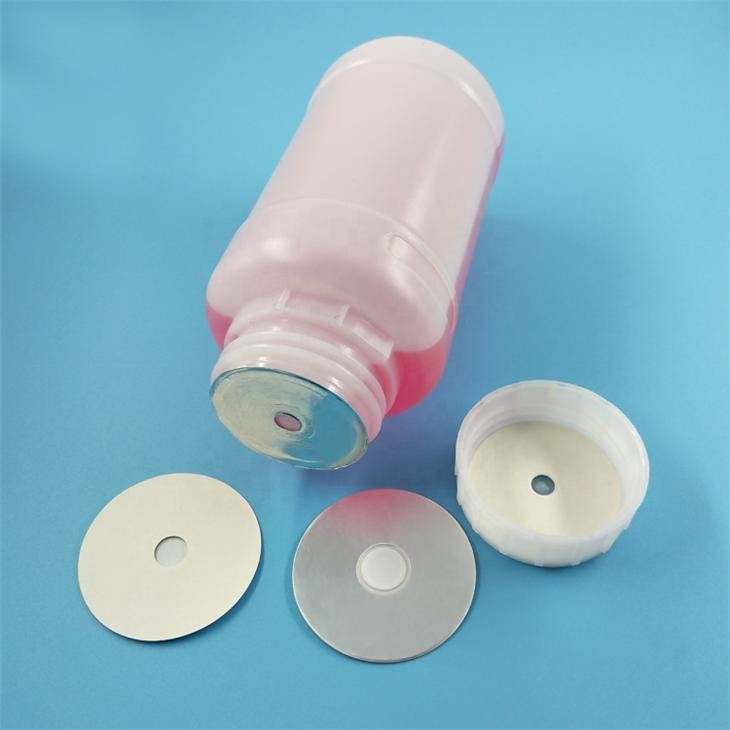
The packaging manufacturer added an ePTFE vent membrane to the bottle cap liner system.
The membrane uses a microporous structure that allows air and gas to pass through while helping block liquid, water, dust, and contaminants. This creates a controlled venting path for the bottle.
The ePTFE vent membrane was integrated into the closure area, allowing internal pressure to equalize gradually with the outside environment.
Unlike an open vent hole, the membrane supports breathable performance while maintaining liquid resistance.
Application Example: HDPE Pesticide Bottle
The application involved an HDPE bottle used for liquid pesticide packaging. The bottle was fitted with a screw cap and vented liner.
During transport testing, the packaging was exposed to temperature changes that could cause internal pressure fluctuations. Without a venting solution, pressure could build up inside the bottle and increase the risk of leakage around the cap.
After adding the ePTFE vent membrane, the packaging system was able to release pressure more effectively while keeping the liquid product inside the bottle.
The vented closure helped reduce stress on the cap and bottle structure during storage and transport.
Key Benefits for Agrochemical Packaging
Using a breathable vent membrane can provide several benefits for pesticide and chemical bottle manufacturers:
- Helps equalize internal and external pressure
- Reduces the risk of bottle swelling and deformation
- Supports leakage prevention during transport
- Helps protect caps, liners, and induction seals
- Improves packaging reliability in hot and cold conditions
- Reduces the risk of damaged cartons caused by leakage
- Supports safer handling of chemical products
- Can be customized for different bottle sizes and cap designs
For agrochemical packaging, venting performance should be considered together with bottle material, cap structure, liner design, chemical formulation, and transport conditions.
Custom Venting Solutions for Chemical Bottles
Different agrochemical products require different venting specifications. A highly volatile pesticide may need a different airflow level from a liquid fertilizer or industrial chemical.
Ventrase provides breathable vent membrane solutions for pesticide bottles, agrochemical containers, chemical jerry cans, lubricant packaging, and industrial liquid containers.
Custom vent membranes can be developed based on bottle size, cap type, chemical compatibility, airflow requirements, storage temperature, and leakage protection targets.
A properly designed vented closure can help improve packaging safety, reduce transport damage, and support more reliable chemical product delivery.
For technical support or custom venting samples, contact Ventrase at info@ventrase.com.