
How to Select the Right Vent Plug for Agrochemical Packaging
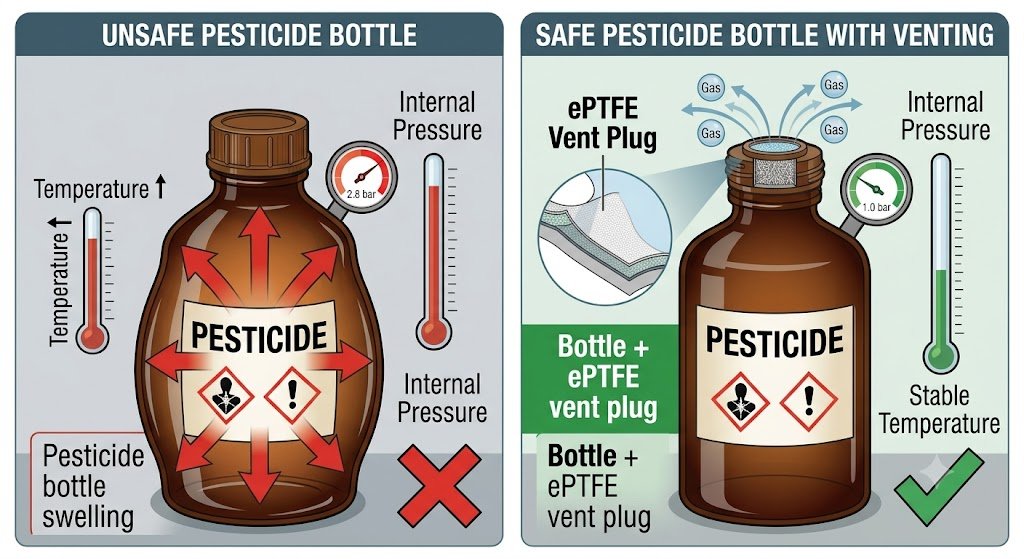
Agrochemical packaging requires reliable protection because pesticide and fertilizer products may create internal pressure during storage and transportation.
Without proper ventilation, chemical containers may experience:
- Bottle swelling
- Cap leakage
- Container deformation
- Packaging failure
An ePTFE vent plug provides controlled ventilation by allowing gas exchange while preventing liquid leakage.
This guide explains how to select the right vent plug for agrochemical packaging applications.
Learn more about ePTFE membrane technology:
ePTFE Membrane Technology Explained
Why Does Agrochemical Packaging Need Vent Plugs?
Agricultural chemicals often contain active ingredients and formulations that may generate gases or change pressure during storage.
Common products requiring ventilation include:
- Pesticides
- Herbicides
- Fungicides
- Liquid fertilizers
- Agricultural additives
During transportation, containers may also experience temperature fluctuations that increase internal pressure.
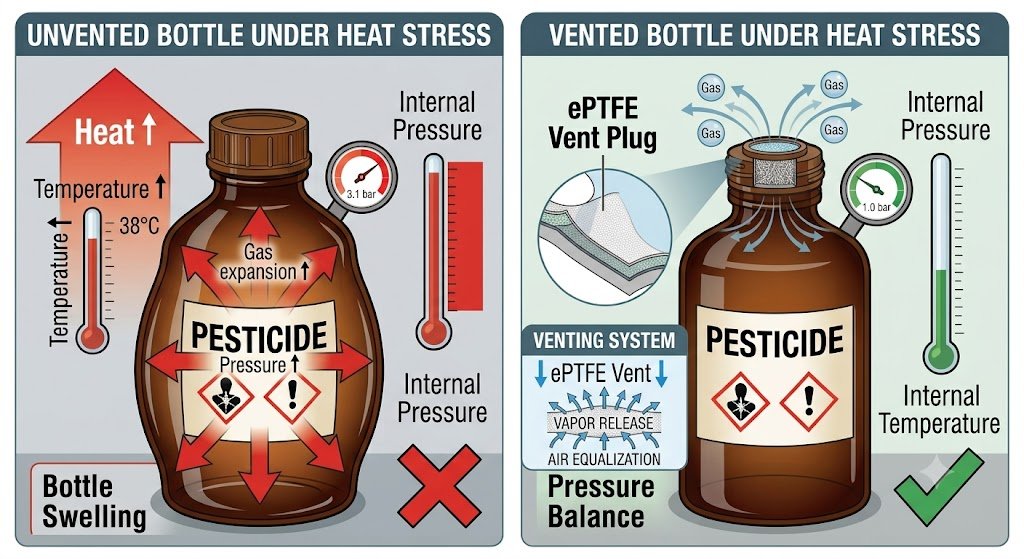
Common Problems Without Proper Venting
| Problem | Impact |
|---|---|
| Container Swelling | Affects appearance and storage stability |
| Cap Leakage | Creates safety and transportation risks |
| Seal Stress | Reduces package reliability |
| Product Damage | Increases customer complaints |
What Is an Agrochemical Vent Plug?
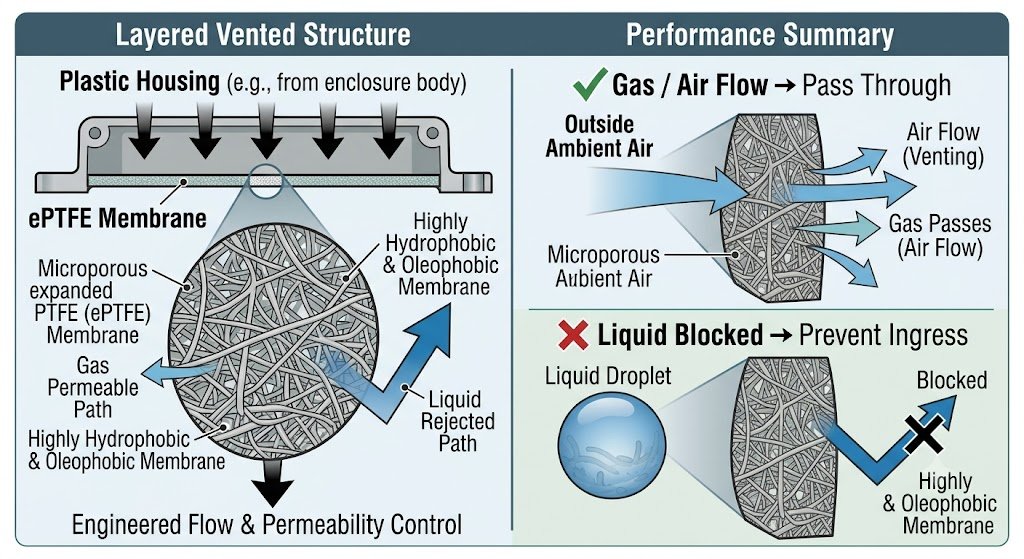
An agrochemical vent plug is a pressure equalization component designed specifically for chemical packaging.
It normally consists of:
- Plastic housing
- ePTFE breathable membrane
- Protective structure
The ePTFE membrane allows gases to escape while blocking water and liquid chemicals.
Key Factors When Selecting an Agrochemical Vent Plug
1. Chemical Compatibility
Agrochemical products contain different chemical formulations, so material compatibility is critical.
Engineers should consider:
- Chemical composition
- Concentration level
- Storage temperature
- Long-term exposure
2. Required Airflow Performance
Different container sizes require different ventilation rates.
Selection depends on:
- Container volume
- Gas generation level
- Pressure change frequency
3. Waterproof Protection
Agrochemical containers may be exposed to rain, humidity, and outdoor environments.
A high-quality vent plug should provide:
- Waterproof protection
- Dust resistance
- Stable airflow performance
4. Installation Method
Common installation solutions include:
- Press-fit vent plugs
- Snap-in vents
- Vent liners integrated into caps
ePTFE Vent Plug vs Traditional Sealed Cap
| Feature | Traditional Cap | ePTFE Vent Plug |
|---|---|---|
| Pressure Equalization | No | Yes |
| Gas Release | No | Yes |
| Water Protection | Good | Excellent |
| Chemical Packaging | Limited | Designed For |
Recommended Ventrase Solutions for Agrochemical Packaging
D17 Press Fit Vent Plug
Suitable for small and medium chemical containers requiring reliable pressure equalization.
Applications:
- Pesticide bottles
- Agricultural chemical containers
- Industrial liquid packaging
Explore D17 and Other ePTFE Vent Plug Solutions
D38 Drum Vent Plug
Designed for larger containers requiring higher airflow capacity.
Suitable for:
- Chemical drums
- Fertilizer containers
- Industrial bulk packaging
How Does ePTFE Technology Improve Agrochemical Packaging?
ePTFE membrane technology provides a unique combination of:
- Waterproof protection
- Breathable ventilation
- Chemical resistance
- Pressure management
Technical explanation:
How Does an ePTFE Vent Membrane Work?
Application Example: Preventing Pesticide Bottle Swelling
A pesticide manufacturer may experience bottle deformation during hot weather storage.
By installing an ePTFE vent plug, generated gas can escape while the liquid remains protected.
The result:
- Reduced bottle swelling
- Improved package stability
- Lower leakage risk
- Better customer experience
Why Choose Ventrase Agrochemical Vent Solutions?
Ventrase develops waterproof breathable vent solutions for chemical packaging manufacturers worldwide.
- ePTFE membrane expertise
- Custom vent design
- OEM manufacturing
- Application engineering support
- Quality-controlled production
Request Agrochemical Vent Plug Solution
Frequently Asked Questions
Why do pesticide bottles need vent plugs?
Pesticide bottles may generate internal pressure due to chemical reactions and temperature changes. Vent plugs help balance pressure and prevent deformation.
Are ePTFE vent plugs resistant to agricultural chemicals?
Yes. ePTFE has excellent chemical resistance and is widely used in demanding industrial packaging applications.
Which vent plug is suitable for pesticide containers?
The correct choice depends on container size, chemical formulation, airflow requirement, and installation design.
Conclusion
Selecting the right agrochemical vent plug is essential for preventing swelling, leakage, and packaging failures.
With waterproof breathable ePTFE membrane technology, Ventrase vent solutions help chemical packaging manufacturers improve product reliability.