
How to Prevent Chemical Container Swelling with ePTFE Vent Plugs
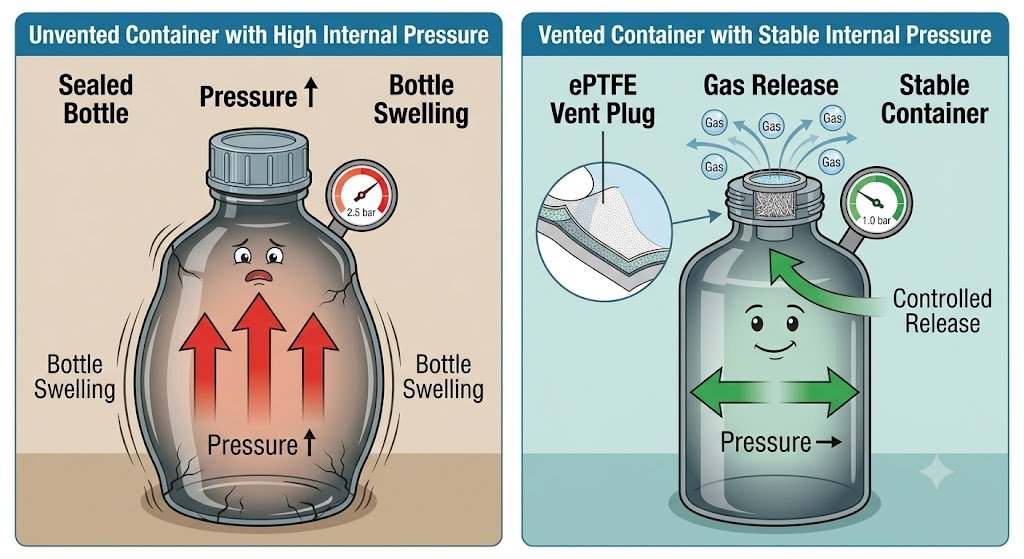
Chemical container swelling is a common challenge in industrial packaging, especially for products that generate gas or experience temperature changes during storage and transportation.
When pressure builds inside a sealed container, it may cause:
- Bottle deformation
- Cap leakage
- Packaging failure
- Customer complaints
An ePTFE vent plug provides an effective solution by allowing controlled gas exchange while preventing liquid leakage.
This article explains why chemical containers swell and how pressure equalization vent technology helps improve packaging reliability.
Learn more about the science behind ePTFE membranes:
ePTFE Membrane Technology Guide
Why Do Chemical Containers Swell?
Chemical container swelling happens when internal pressure becomes higher than external atmospheric pressure.
Several factors can create pressure buildup inside containers.
1. Temperature Changes
During transportation and storage, chemical containers may experience large temperature variations.
When temperature increases, gases inside the container expand and create higher internal pressure.
2. Chemical Gas Generation
Some chemical products naturally release gases over time.
Examples include:
- Agrochemicals
- Liquid fertilizers
- Cleaning chemicals
- Industrial fluids
3. Transportation Pressure Changes
During international transportation, containers may experience altitude changes and pressure variations.
A completely sealed container cannot automatically balance these pressure differences.
Problems Caused by Chemical Container Swelling
| Problem | Impact |
|---|---|
| Container Deformation | Affects appearance and stacking stability |
| Cap Leakage | Creates safety and contamination risks |
| Seal Failure | Reduces product reliability |
| Transportation Damage | Increases logistics losses |
How Do ePTFE Vent Plugs Prevent Container Swelling?
An ePTFE vent plug creates a controlled ventilation path between the inside and outside of a container.
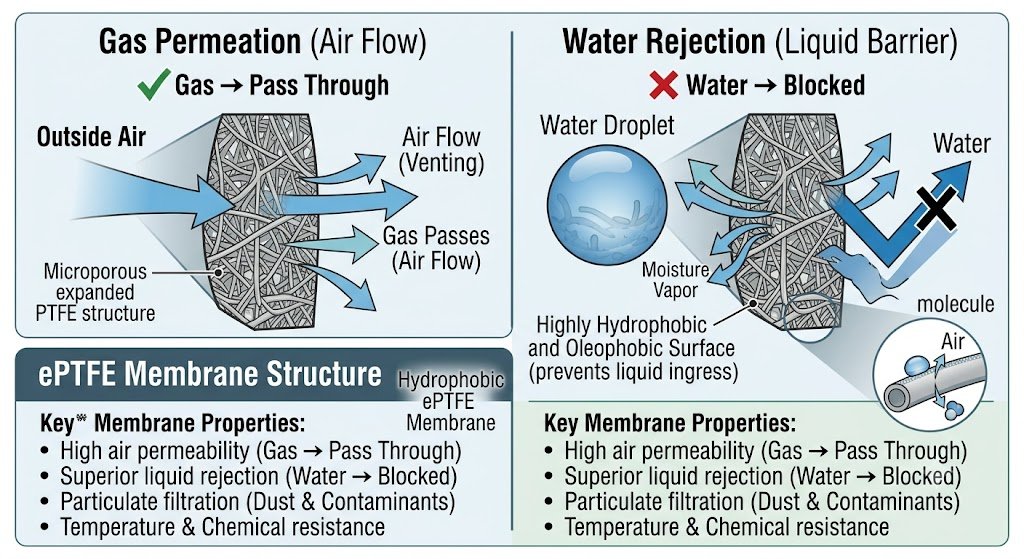
The integrated ePTFE membrane allows gases to escape while blocking liquids.
| Function | Benefit |
|---|---|
| Gas Release | Reduces internal pressure buildup |
| Air Exchange | Maintains pressure balance |
| Water Blocking | Protects chemical contents |
| Dust Resistance | Improves package protection |
Why Use ePTFE Membrane Technology?
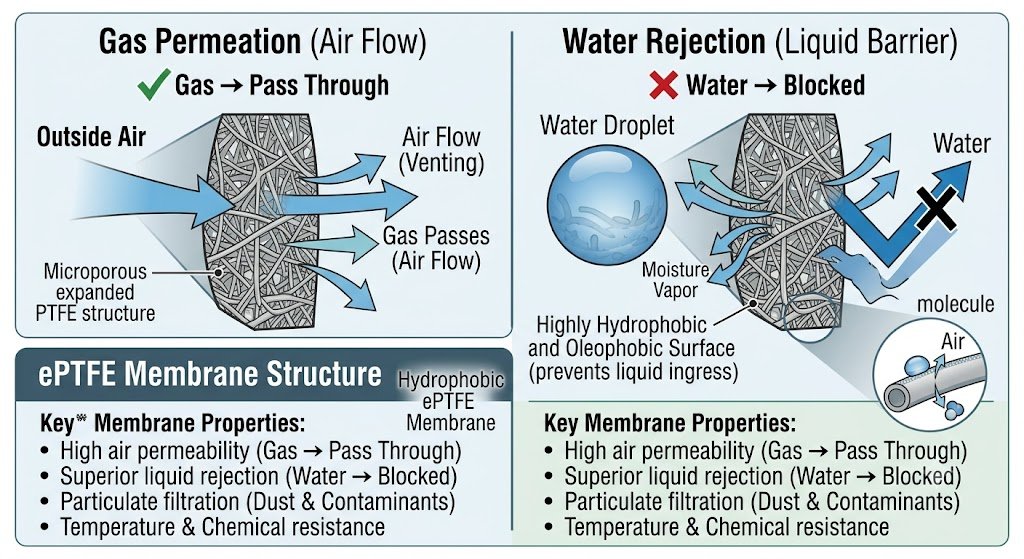
The key advantage of ePTFE is its unique microporous structure.
The membrane contains extremely small pores that allow air and vapor transmission while preventing liquid penetration.
- Waterproof performance
- Breathable airflow
- Chemical resistance
- Long-term stability
More technical information:
How Does an ePTFE Vent Membrane Work?
Applications of ePTFE Vent Plugs in Chemical Packaging
Agrochemical Containers
Pesticide and fertilizer containers often require pressure management because chemical reactions may generate gas.
ePTFE vent plugs help reduce:
- Bottle swelling
- Leakage risks
- Packaging deformation
Industrial Chemical Containers
Industrial liquids require reliable protection during long-term storage and transportation.
Applications include:
- Chemical drums
- Lubricant containers
- Industrial fluid packaging
Choosing the Right ePTFE Vent Plug for Chemical Containers
Selecting the correct vent solution depends on several factors:
- Container volume
- Required airflow rate
- Chemical compatibility
- Installation method
- Operating environment
Explore Ventrase vent solutions:
Plastic Vent Plug vs Vent Liner for Chemical Packaging
Both solutions can provide pressure management, but they are designed for different applications.
| Solution | Recommended Application |
|---|---|
| Plastic Vent Plug | Industrial containers, drums, customized packaging |
| Vent Liner | Bottle caps and high-volume packaging |
Learn more:
Plastic Vent Plug vs Vent Liner Comparison
Why Choose Ventrase ePTFE Vent Solutions?
Ventrase provides customized waterproof breathable vent solutions for chemical packaging and industrial applications.
- Advanced ePTFE membrane technology
- Custom vent design capability
- OEM manufacturing support
- Application engineering assistance
Contact Ventrase:
Frequently Asked Questions
Why do chemical bottles swell?
Chemical bottles swell because internal pressure increases due to temperature changes, gas generation, or transportation conditions.
Can ePTFE vent plugs stop chemical container leakage?
Yes. By controlling pressure buildup, ePTFE vent plugs help reduce leakage risks caused by deformation and seal stress.
Are ePTFE vent plugs resistant to chemicals?
Yes. ePTFE provides excellent chemical resistance for many industrial packaging applications.
Conclusion
Chemical container swelling can create serious packaging challenges.
Using an ePTFE vent plug allows controlled pressure equalization while maintaining waterproof protection.
For chemical packaging manufacturers, pressure equalization vent technology improves safety, reliability, and customer satisfaction.