
ePTFE Membrane vs PE Membrane: What Is the Difference?
A Complete Comparison of Structure, Waterproof Performance, Breathability, Chemical Resistance, and Applications
Introduction: Understanding Different Breathable Membrane Materials
Breathable membrane technology is widely used in packaging, electronics, batteries, industrial equipment, and chemical containers where pressure equalization and environmental protection are required.
Among various breathable materials, ePTFE membrane and PE membrane are two commonly used solutions.
Although both materials allow gas transmission while helping prevent liquid penetration, their structure, performance, and application fields are different.
Choosing the correct membrane material is important for achieving the right balance between airflow, waterproof protection, chemical resistance, durability, and cost.
Quick Difference Overview
- ePTFE membrane: Designed for high-performance applications requiring excellent waterproofing, chemical resistance, and long-term reliability.
- PE membrane: A cost-effective breathable material commonly used for general packaging and moisture management applications.
What Is an ePTFE Membrane?
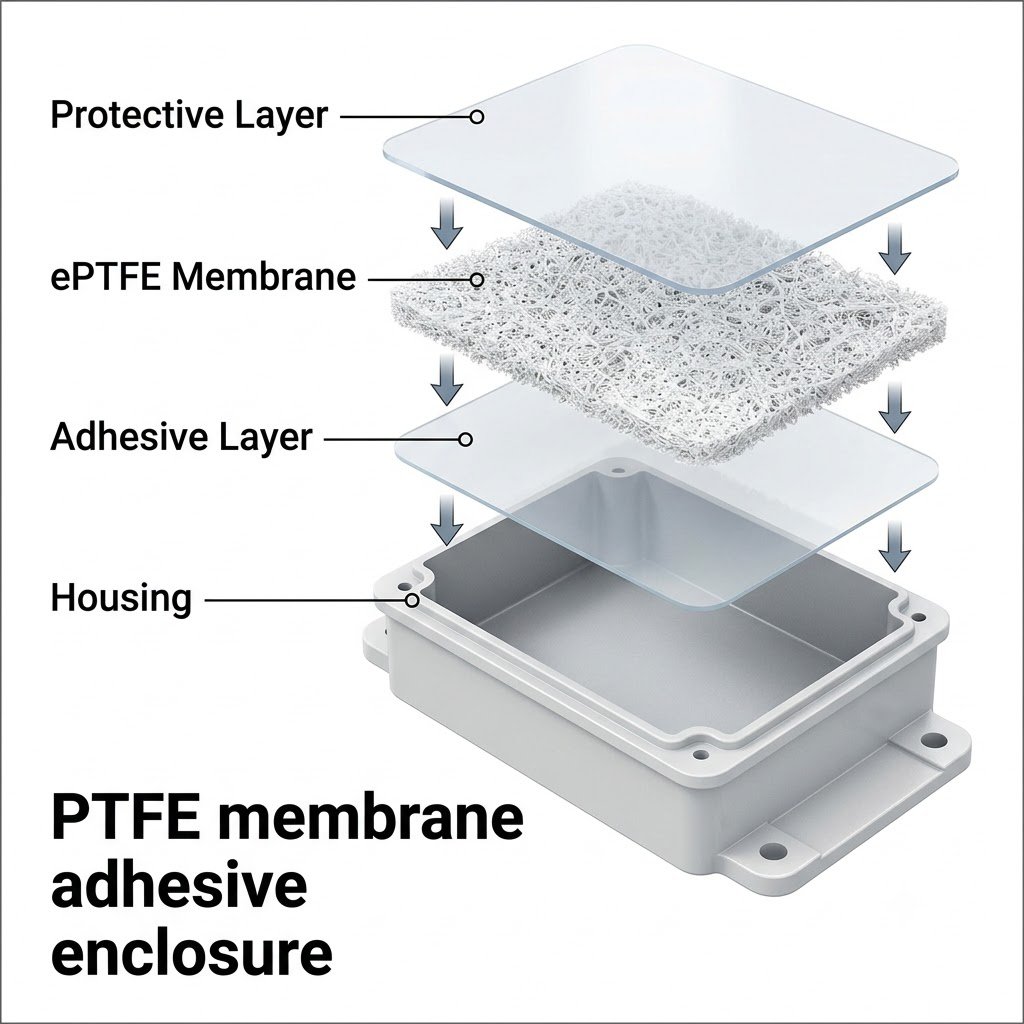
ePTFE stands for expanded polytetrafluoroethylene. It is a microporous membrane created by expanding PTFE material to form a unique three-dimensional pore structure.
The microporous structure allows air and gas molecules to pass through while preventing liquid water from entering.
Because of its excellent stability and resistance properties, ePTFE membrane technology is widely used in demanding industrial applications.
Key Characteristics of ePTFE Membrane
- High waterproof performance.
- Excellent airflow capability.
- Strong chemical resistance.
- Wide temperature resistance range.
- Long-term durability.
- Stable microporous structure.
What Is a PE Membrane?
PE membrane refers to a breathable membrane made from polyethylene material.
Polyethylene is widely used because it provides a lightweight, flexible, and economical solution for applications requiring basic moisture control and air exchange.
PE membranes are commonly found in packaging applications, including vent liners and general breathable packaging solutions.
Key Characteristics of PE Membrane
- Lightweight material.
- Cost-effective solution.
- Good moisture resistance.
- Flexible processing options.
- Suitable for general packaging applications.
Why Compare ePTFE and PE Membranes?
Both materials are designed to provide breathable protection, but they serve different market needs.
For example, a chemical container storing aggressive liquids may require higher chemical resistance, while a standard packaging application may prioritize cost efficiency.
Understanding the difference helps engineers and purchasing teams select the most suitable membrane technology.
ePTFE Membrane vs PE Membrane: Performance Comparison
Although both ePTFE and PE membranes provide breathable protection, their performance characteristics are different due to their material structure and manufacturing process.
The correct choice depends on application requirements such as waterproof performance, airflow, chemical exposure, temperature range, and service life.
| Feature | ePTFE Membrane | PE Membrane |
|---|---|---|
| Material | Expanded Polytetrafluoroethylene | Polyethylene |
| Structure | Three-dimensional microporous structure | Polymer breathable pore structure |
| Waterproof Performance | Excellent | Good |
| Air Permeability | High | Medium |
| Chemical Resistance | Excellent | Good |
| Temperature Resistance | High | Moderate |
| Cost | Higher | Lower |
| Typical Applications | Industrial, chemical, battery, electronics | General packaging and vent liners |
Difference 1: Membrane Structure
The biggest difference between ePTFE and PE membrane technology is the internal pore structure.
ePTFE Microporous Structure
During the expansion process, PTFE forms a network of interconnected micropores.
ePTFE Structure Advantages
- Stable microporous network.
- High gas transmission efficiency.
- Strong resistance against liquid penetration.
- Excellent chemical stability.
PE Membrane Structure
PE membranes use polyethylene-based porous structures to achieve air exchange and moisture management.
They are widely used where moderate breathability and cost efficiency are the main requirements.
Difference 2: Waterproof Performance
Waterproof protection is one of the most important factors in breathable membrane selection.
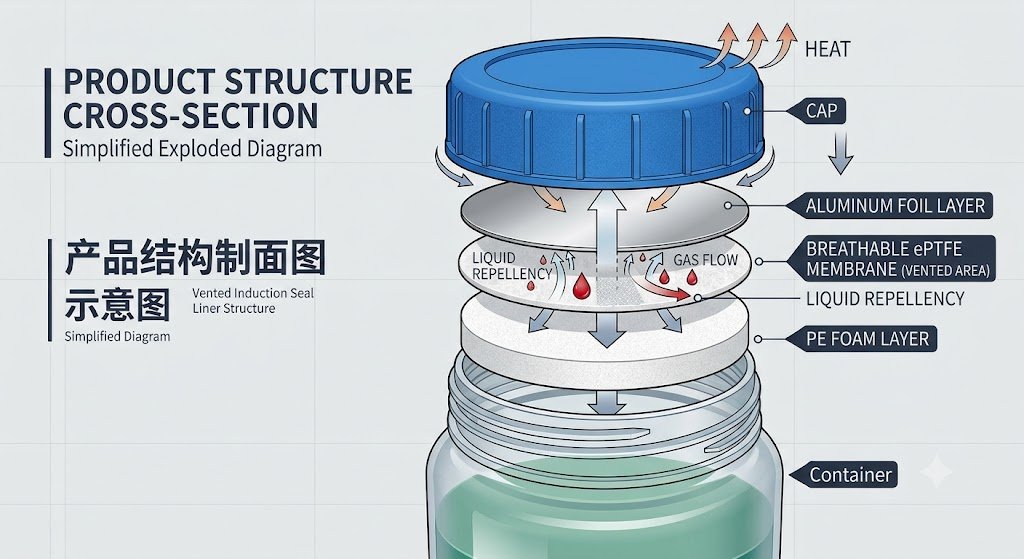
ePTFE membranes provide outstanding waterproof performance because their pore size is much smaller than liquid water droplets while still allowing gas molecules to pass.
ePTFE Advantages in Waterproof Protection
- Suitable for outdoor environments.
- Protects sensitive equipment from moisture.
- Supports IP-rated enclosure applications.
- Maintains performance during long-term exposure.
Difference 3: Air Permeability and Pressure Equalization
Both materials can provide airflow, but ePTFE membranes are commonly selected for applications requiring more precise pressure management.
Applications such as chemical containers, battery systems, and industrial equipment require stable gas exchange to prevent pressure buildup.
Learn How Waterproof Breathable Membranes WorkDifference 4: Chemical Resistance
Chemical compatibility is critical when selecting membrane materials for industrial packaging.
ePTFE provides excellent resistance to many chemicals, solvents, and aggressive environments.
For applications such as pesticide containers, fertilizer packaging, and industrial chemical storage, ePTFE vent solutions are often preferred.
Recommended Applications for ePTFE Membrane
- Chemical containers.
- Industrial liquid packaging.
- Battery enclosure vents.
- Automotive electronics.
- Outdoor equipment housings.
Difference 5: Temperature Resistance
Temperature resistance is another important factor when selecting breathable membrane materials for industrial applications.
Products may experience temperature changes during transportation, storage, charging cycles, or outdoor operation. The membrane must maintain stable performance under these conditions.
Temperature Performance Comparison
- ePTFE Membrane: Provides excellent temperature stability and maintains breathable performance in demanding environments.
- PE Membrane: Suitable for moderate temperature applications where extreme conditions are not required.
ePTFE Membrane Applications
Due to its excellent waterproof performance, chemical resistance, and durability, ePTFE membrane technology is widely used in high-performance applications.
Chemical Packaging Applications
Chemical containers often require reliable pressure equalization because temperature changes and chemical vapor expansion can create internal pressure.
ePTFE vent solutions help maintain container stability while reducing the risk of swelling, deformation, and leakage.
Typical Chemical Applications
- Pesticide containers.
- Fertilizer packaging.
- Industrial chemicals.
- Lubricant containers.
- Specialty liquid packaging.
Battery and Electronics Applications
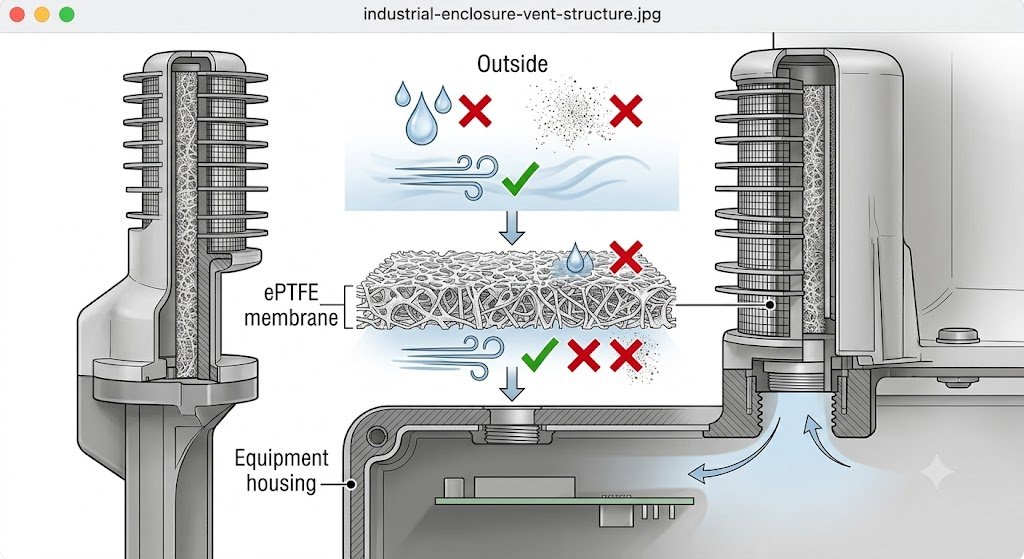
Battery systems and electronic enclosures require protection from moisture while allowing pressure equalization.
ePTFE membrane vents help prevent enclosure stress caused by temperature changes and internal gas generation.
PE Membrane Applications
PE membranes are commonly selected for applications where basic breathable performance and cost efficiency are the main requirements.
Typical PE Membrane Applications
- Bottle vent liners.
- Consumer packaging.
- General moisture management solutions.
- Low-pressure packaging applications.
- Disposable product packaging.
For example, induction vent liners commonly use PE-based breathable structures because they provide an economical solution for bottle packaging applications.
Explore Ventrase Vent Liner SolutionsHow to Choose Between ePTFE and PE Membrane?
The correct membrane choice depends on the application requirements rather than simply selecting the lowest-cost material.
| Requirement | Recommended Material | Reason |
|---|---|---|
| Chemical resistance | ePTFE | Excellent chemical stability. |
| Outdoor equipment protection | ePTFE | Better waterproof performance. |
| Battery enclosure venting | ePTFE | Reliable pressure equalization. |
| Chemical packaging vent plug | ePTFE | Higher durability and protection. |
| Standard bottle vent liner | PE | Cost-effective packaging solution. |
Ventrase ePTFE Membrane and Vent Solutions
Ventrase provides breathable membrane solutions for packaging, electronics, battery systems, and industrial applications.
Our product range includes ePTFE vent plugs and vent liners designed for different performance requirements.
Recommended Ventrase Solutions
- D10 Press-Fit ePTFE Vent Plug
Compact venting solution for small enclosures and packaging. - D17 Press-Fit ePTFE Vent Plug
Recommended for chemical packaging and industrial applications. - D38 Drum ePTFE Vent Plug
Designed for large chemical containers and drum applications.
Material Selection Summary
In general, ePTFE membrane is the preferred choice for demanding industrial applications requiring high waterproof performance, chemical resistance, and long-term reliability.
PE membrane remains an excellent option for cost-sensitive applications where moderate breathable performance is sufficient.
Final Recommendation: Which Membrane Should You Choose?
Both ePTFE membrane and PE membrane provide breathable protection, but they are designed for different application requirements.
The best choice depends on the required balance between performance, durability, environmental protection, and cost.
Choose ePTFE Membrane When You Need:
- High waterproof performance.
- Excellent chemical resistance.
- Long-term outdoor durability.
- Reliable pressure equalization.
- Protection for sensitive equipment.
- Performance in demanding industrial environments.
Choose PE Membrane When You Need:
- A cost-effective breathable solution.
- Basic moisture management.
- General packaging applications.
- Vent liner solutions for bottle closures.
ePTFE Membrane Selection Checklist
Before selecting a breathable membrane solution, consider the following questions:
| Question | Recommended Consideration |
|---|---|
| Is the application exposed to water? | Select a membrane with suitable waterproof performance. |
| Does the product contain chemicals? | ePTFE is usually preferred for chemical environments. |
| Is pressure equalization required? | Choose a suitable vent membrane or vent plug solution. |
| Is the application cost-sensitive? | PE membrane may provide a suitable solution. |
| Does the product operate in harsh environments? | Consider ePTFE membrane technology. |
Why Choose Ventrase ePTFE Membrane Technology?
Ventrase focuses on advanced breathable membrane and pressure equalization solutions for global industrial applications.
Our ePTFE membrane products are developed for industries requiring reliable protection, stable airflow, and long-term performance.
Ventrase Technology Advantages
- Advanced ePTFE microporous membrane structure.
- Waterproof breathable performance.
- Excellent chemical compatibility.
- Solutions for packaging, electronics, and battery applications.
- Customized membrane and vent solutions.
- Technical support for product selection.
Frequently Asked Questions About ePTFE and PE Membranes
Is ePTFE membrane better than PE membrane?
ePTFE membrane provides higher performance in waterproof protection, chemical resistance, and demanding industrial applications. PE membrane is suitable for cost-sensitive applications requiring basic breathable performance.
What is the main difference between ePTFE and PE membrane?
The main difference is the material structure and performance capability. ePTFE provides a more stable microporous structure with stronger waterproof and chemical resistance properties.
Which membrane is better for chemical containers?
For chemical containers, ePTFE membrane is generally preferred because of its excellent chemical resistance and pressure equalization capability.
Can PE membrane be used as a vent liner?
Yes. PE membrane is commonly used in vent liner applications where moderate breathable performance and cost efficiency are required.
Is ePTFE membrane waterproof and breathable?
Yes. ePTFE membrane allows air and gas transmission while preventing liquid water penetration.
Which industries use ePTFE membrane technology?
ePTFE membranes are widely used in chemical packaging, battery systems, electronics, automotive components, and industrial equipment.
Related Articles
Explore Ventrase Vent Solutions
Need Help Selecting the Right Membrane Solution?
Ventrase provides ePTFE membranes, vent plugs, and vent liner solutions for chemical packaging, electronics, battery systems, and industrial applications.
Contact Ventrase Engineering Team