
Plastic Vent Plug vs Vent Liner: Which Venting Solution Is Better?
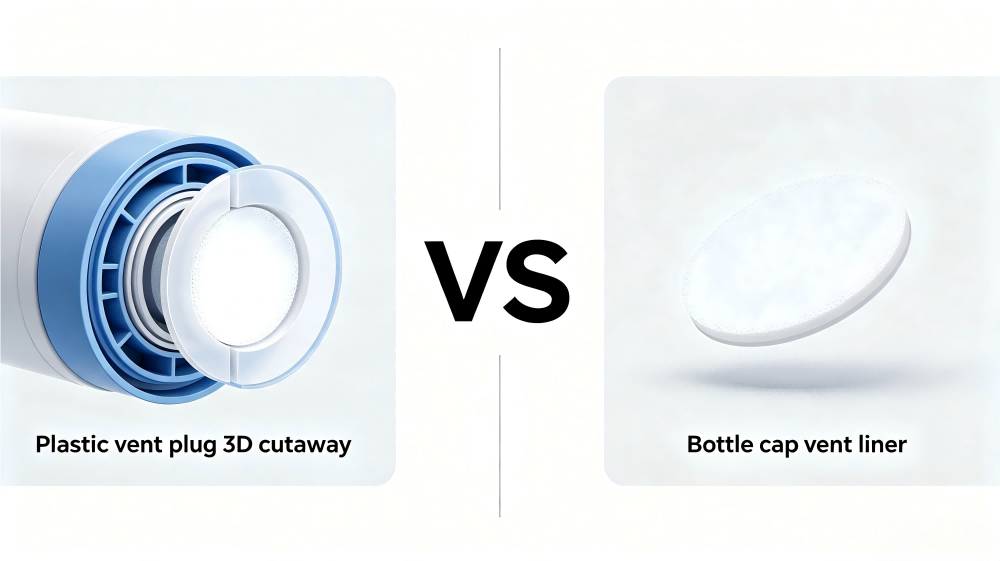
When designing chemical packaging, industrial containers, or liquid storage systems, selecting the correct venting solution is critical.
Two common solutions are plastic vent plugs and vent liners.
Both solutions use breathable membrane technology to manage pressure differences, but they are designed for different applications.
This article compares plastic vent plugs and vent liners, explaining their differences, advantages, and how to select the right solution.
Learn more about waterproof breathable membrane technology:
ePTFE Membrane Technology Guide
What Is a Plastic Vent Plug?
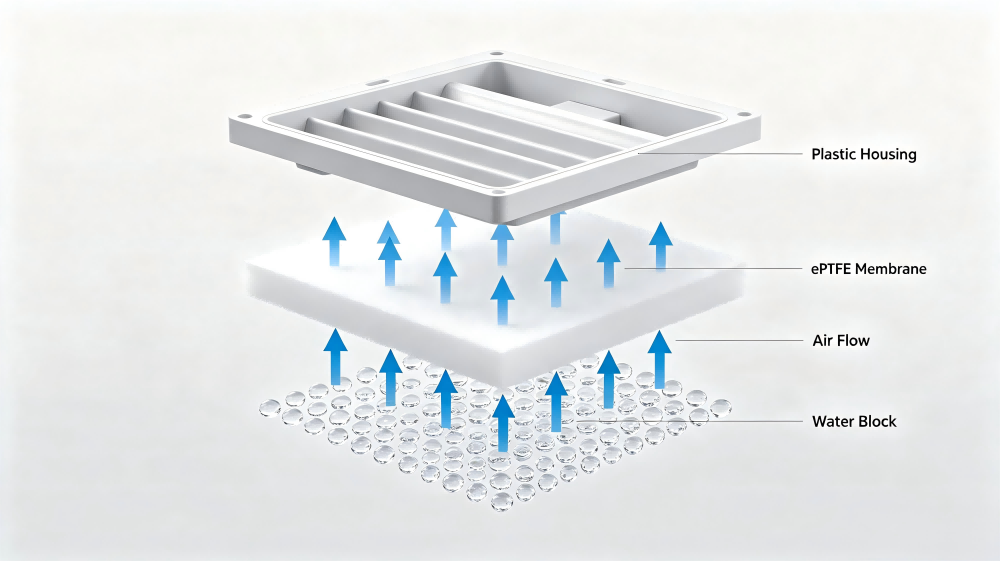
A plastic vent plug is a standalone venting component consisting of a plastic housing integrated with an ePTFE membrane.
The vent plug is installed directly into a container, enclosure, or packaging structure to provide controlled airflow and pressure equalization.
Typical features include:
- Independent venting component
- Higher mechanical protection
- Flexible installation options
- Suitable for industrial environments
What Is a Vent Liner?
A vent liner is a membrane-based sealing liner installed inside a bottle cap or closure.
It combines sealing performance with breathable ventilation.
Vent liners are commonly used in:
- Chemical bottles
- Pesticide containers
- Cleaning product packaging
- Liquid chemical packaging
Unlike plastic vent plugs, vent liners are integrated into the closure system.
Plastic Vent Plug vs Vent Liner: Key Differences
| Comparison | Plastic Vent Plug | Vent Liner |
|---|---|---|
| Installation | Installed separately into container or housing | Integrated into bottle cap |
| Protection | Higher mechanical protection | Compact sealing solution |
| Airflow Performance | Usually higher airflow options | Depends on liner design |
| Replacement | Can be replaced independently | Usually replaced with closure |
| Application Range | Industrial packaging, electronics, drums | Bottle caps and small containers |
When Should You Choose a Plastic Vent Plug?
Plastic vent plugs are recommended when the application requires stronger protection and customized installation.
1. Large Industrial Containers
Large containers and drums often require higher airflow capacity and stronger mechanical support.
Applications include:
- Chemical drums
- Industrial liquid containers
- Lubricant packaging
Recommended solution:
Industrial ePTFE Vent Plug Solutions
2. Electronic and Battery Enclosures
Sealed housings require pressure equalization while maintaining environmental protection.
Plastic vent plugs provide:
- Waterproof protection
- Dust resistance
- Stable pressure balance
When Should You Choose a Vent Liner?
Vent liners are ideal when the venting function needs to be combined with an existing bottle closure.
Common applications:
- Pesticide bottles
- Chemical packaging
- Consumer liquid products
Advantages:
- Simple installation
- Low assembly requirements
- Suitable for high-volume packaging
Plastic Vent Plug vs Vent Liner: Which Is Better for Chemical Packaging?
There is no universal answer. The best choice depends on container design, airflow requirements, and production method.
| Application Requirement | Recommended Solution |
|---|---|
| High airflow requirement | Plastic Vent Plug |
| Bottle cap integration | Vent Liner |
| Large industrial containers | Plastic Vent Plug |
| High-volume bottle production | Vent Liner |
| Custom vent design | Plastic Vent Plug |
How Does ePTFE Technology Improve Both Solutions?
Both plastic vent plugs and vent liners often use ePTFE membrane technology because of its unique properties.
- Waterproof breathable performance
- Chemical resistance
- Air permeability
- Pressure equalization capability
Learn more about how ePTFE achieves waterproof and breathable performance:
How Does an ePTFE Vent Membrane Work?
Why Choose Ventrase Venting Solutions?
Ventrase provides customized venting solutions for industrial packaging and protective applications.
- ePTFE membrane expertise
- Custom plastic vent plug design
- Vent liner solutions
- Application engineering support
- OEM manufacturing capability
Explore our products:
Frequently Asked Questions
Are vent plugs better than vent liners?
Neither solution is always better. Plastic vent plugs provide more flexibility and protection, while vent liners are better integrated into bottle closures.
Can vent liners use ePTFE membranes?
Yes. Many high-performance vent liners use ePTFE membranes to achieve waterproof breathable performance.
Which solution is better for chemical containers?
The correct choice depends on container size, chemical properties, airflow requirements, and production process.
Conclusion
Plastic vent plugs and vent liners both provide effective pressure management solutions, but they serve different application needs.
For industrial containers, drums, and customized applications, plastic vent plugs usually provide greater flexibility.
For bottle caps and high-volume packaging, vent liners offer a compact integrated solution.
Ventrase helps customers select the right waterproof breathable venting technology for their applications.