
Airflow Rate vs. Water Entry Pressure: What Matters When Selecting an ePTFE Vent?
When selecting an ePTFE vent plug for industrial packaging, two technical parameters often attract the most attention: airflow rate and water entry pressure.
Airflow determines how efficiently a vent can exchange gas between the inside and outside of a container. Water entry pressure indicates how well the membrane resists liquid water penetration under specified test conditions.
Both parameters are important, but they serve different purposes. Selecting a vent based on only one specification may lead to unsuitable performance in real packaging applications.
In this guide, we explain the difference between airflow rate and water entry pressure, why both matter, and how engineers can evaluate an ePTFE vent plug for their application.

1. What Is Airflow Rate in an ePTFE Vent?
Airflow rate refers to the volume of air that passes through a vent within a specified period under a defined pressure difference.
For packaging applications, airflow is often measured in units such as ml/min or L/h at a specified differential pressure. The test pressure and measurement method are essential because airflow values obtained under different conditions cannot be directly compared.
For example, an airflow value measured at 12 mbar may differ from a value measured at 20 mbar. When comparing different vent products, buyers should check the test pressure, test conditions and measurement method.
Why Is Airflow Important?
Airflow capacity affects how quickly a container can exchange gas and respond to pressure differences.
In chemical packaging, pressure may change because of:
- Temperature fluctuations during storage and transportation
- Gas generation from certain formulations
- Changes in atmospheric pressure
- Liquid dispensing and container handling
- Cooling after filling
A vent with insufficient airflow for the application may not balance pressure quickly enough under expected conditions. This can contribute to container swelling, deformation, leakage or vacuum-related problems.
However, higher airflow is not automatically better. The required airflow should be determined according to container volume, pressure changes, filling and dispensing conditions, and the actual packaging system.
2. What Is Water Entry Pressure?
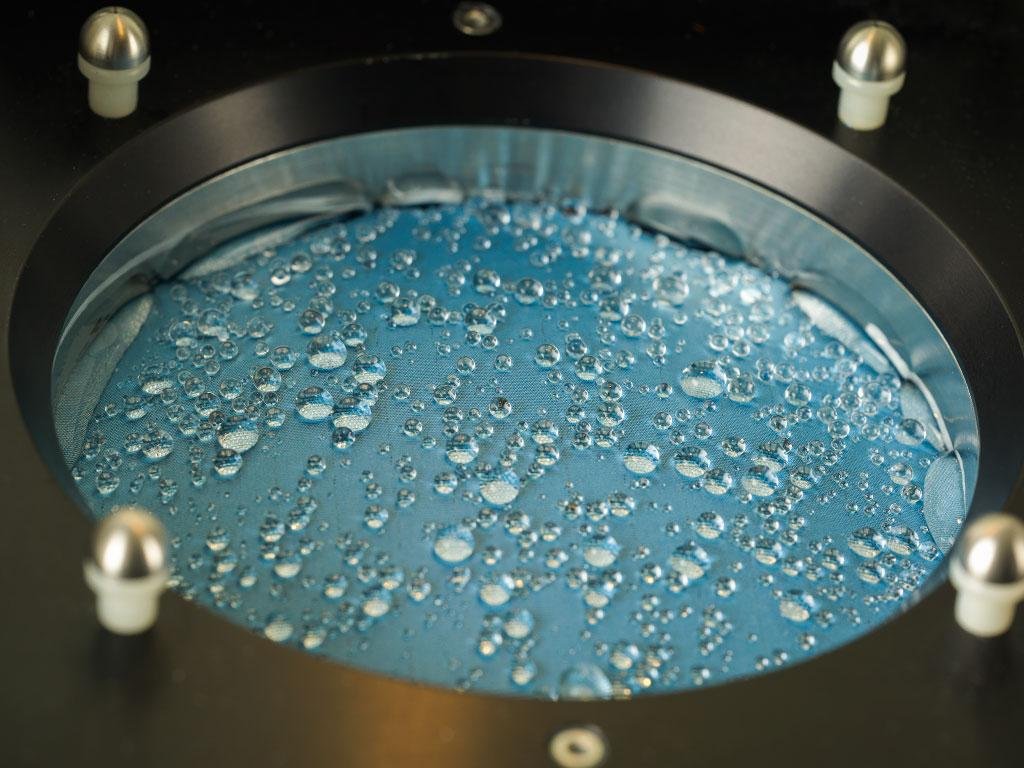
Water entry pressure (WEP) is a measure of the pressure at which water begins to penetrate a hydrophobic membrane under a specified test method and test conditions.
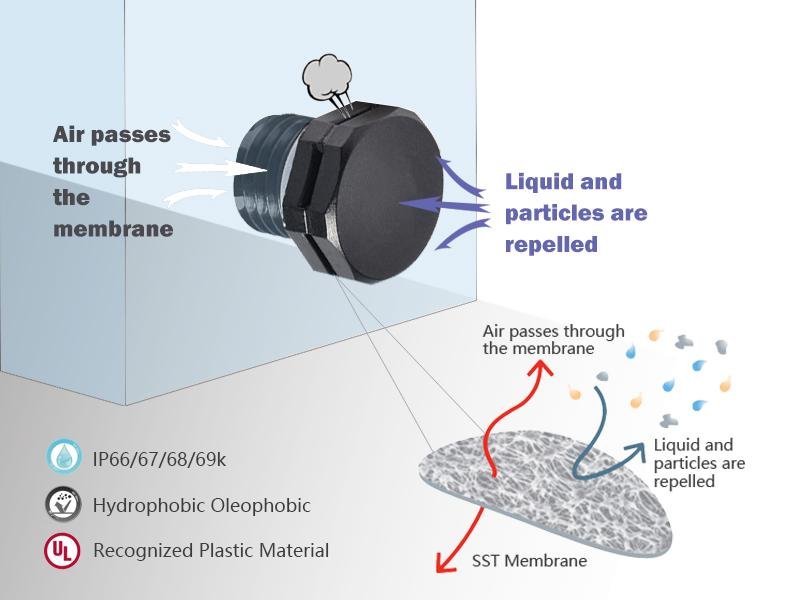
ePTFE membranes have a microporous structure and hydrophobic properties. These characteristics allow air to pass through the membrane while resisting liquid water penetration.
Water entry pressure is influenced by factors such as:
- Membrane structure and pore characteristics
- Membrane material and surface properties
- Membrane thickness and construction
- Test liquid and test method
- Membrane condition and product design
For a waterproof breathable vent, WEP helps engineers evaluate the membrane’s resistance to water penetration. It is not a direct measurement of airflow performance.
3. Airflow and Water Entry Pressure Are Not the Same
Airflow rate and water entry pressure describe different aspects of membrane performance.
| Parameter | Airflow Rate | Water Entry Pressure |
|---|---|---|
| What it measures | Gas transmission through the membrane | Resistance to liquid water penetration |
| Typical units | ml/min, L/h | mbar, kPa or other specified units |
| Primary function | Pressure equalization and gas exchange | Water penetration resistance |
| Application concern | Pressure imbalance and deformation | Water ingress and exposure conditions |
| Selection consideration | Required gas exchange rate | Required liquid protection level |
A vent should be evaluated using both parameters together with other relevant requirements, including chemical compatibility, installation structure, operating temperature and mechanical durability.
4. Does Higher Airflow Mean Lower Waterproof Performance?
Not necessarily.
Airflow and water entry pressure are influenced by membrane characteristics, but their relationship is not a simple one-to-one trade-off. Membrane design, material structure, thickness, processing and product construction can all affect performance.
Engineers should not assume that a vent with higher airflow will automatically have lower waterproof performance, or that a vent with higher water entry pressure will always provide lower airflow.
The actual performance should be confirmed through technical data and testing of the complete vent component.
For packaging applications, the objective is to achieve an appropriate balance between pressure equalization and liquid protection rather than maximizing one parameter.

5. How to Choose the Right Airflow for Your Container
When selecting an ePTFE vent plug, engineers should consider the complete container system rather than choosing a vent based on a single airflow value.
Container Volume
Small bottles and large drums have different pressure equalization requirements. Container volume and headspace can influence the required venting capacity.
Gas Generation
Some chemical formulations generate gas during storage. The expected gas generation rate and storage conditions should be considered when determining the required vent performance.
Temperature Changes
Containers may experience temperature fluctuations during filling, warehousing and transportation. These changes can affect internal pressure and the venting requirements.
Dispensing Conditions
For containers that are repeatedly opened, emptied or squeezed, the pressure conditions during dispensing should also be evaluated.
Installation Design
The vent opening, installation structure, container wall, cap design and vent location may affect the performance of the complete system.
Engineers should test the selected vent in the actual packaging design whenever possible.
6. Why Testing the Complete Vent Plug Matters
Membrane performance alone does not determine the performance of a finished vent plug.
The housing, membrane bonding, installation structure and manufacturing consistency may all influence the final result.
For industrial packaging applications, relevant evaluation items may include:
- Airflow performance under defined test conditions
- Water entry pressure
- Liquid leakage testing
- Chemical compatibility
- Temperature exposure
- Mechanical integrity
- Installation and retention performance
Testing should be based on the application requirements and the intended operating environment. A vent that performs well in a laboratory test may still require additional evaluation when installed in a container and exposed to actual chemicals or transportation conditions.
7. How Ventrase Helps with ePTFE Vent Selection
Ventrase provides ePTFE waterproof breathable vent plugs for chemical packaging, industrial liquid containers, lubricant packaging and other pressure-sensitive applications.
Our vent plug series includes D10, D15, D17 and D38 solutions designed for different packaging structures and venting requirements.
When selecting a vent, our technical team can help evaluate:
- Container volume and opening dimensions
- Required airflow performance
- Waterproof requirements
- Application-specific chemical compatibility
- Installation method
- Operating conditions
Learn more about our product range:
Conclusion
Airflow rate and water entry pressure are two important specifications when selecting an ePTFE vent plug. Airflow helps evaluate gas exchange performance, while water entry pressure helps assess resistance to liquid water penetration under defined conditions.
The best venting solution is not necessarily the one with the highest airflow or highest water entry pressure. It is the solution that meets the actual pressure equalization, liquid protection, chemical compatibility and operating requirements of the container.
By evaluating both parameters and testing the complete packaging system, engineers can make more informed decisions when selecting breathable vent components.
Need Help Selecting an ePTFE Vent?
Share your container specifications, application conditions and airflow requirements with Ventrase. Our team can help you evaluate suitable vent plug solutions for your packaging design.
Hangzhou Zuyi New Material Technology Co., Ltd.
Email: info@ventrase.com