
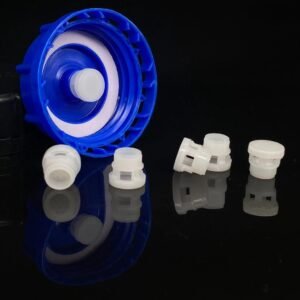
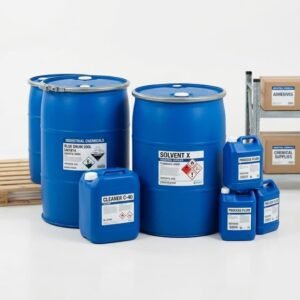
During the transport and storage of aggressive chemicals, agrochemicals, and household cleaning products, packaging distortion is one of the most common—and costly—challenges manufacturers face.
Containers that bulge, swell, or collapse not only harm brand reputation but can also lead to dangerous leaks, regulatory fines, and supply chain disruptions.
In this article, we explore why packaging deformation occurs and how integrating ePTFE (expanded polytetrafluoroethylene) breathable vent plugs and liners provides a continuous, reliable solution for pressure equalization.
Why Do Chemical Containers Swell or Collapse?
Container deformation is almost always driven by pressure imbalances between the inside of the bottle or drum and the ambient environment. This imbalance typically stems from three main causes:
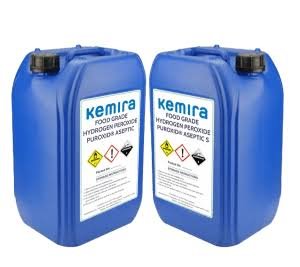
- Off-Gassing (Outgassing): Active chemical ingredients—such as hydrogen peroxide, peracetic acid, sodium hypochlorite (bleach), and organic solvents—decompose over time, releasing gas inside a tightly sealed container. This causes the bottle to swell or bulge.
- Oxygen Consumption / Gas Absorption: Certain formulations absorb oxygen or react with internal headspace gas, creating a negative vacuum that pulls the walls of the container inward (paneling or collapse).
- Altitude and Temperature Fluctuations: Shipping products across varying altitudes or storage under fluctuating temperatures causes gas expansion and contraction, creating dynamic internal pressure changes.
The Role of ePTFE Membrane Technology in Packaging Safety
Traditional sealed caps cannot accommodate pressure shifts without risking liquid leaks or wall failure. Advanced ePTFE microporous breathable membranes solve this challenge through engineered gas transport properties:
- Microporous Structure: The ePTFE matrix consists of billions of interconnected micropores per square inch. These pores allow gases (O₂, CO₂, H₂O vapor) to pass freely through the membrane for continuous degassing.
- Liquid Barrier (Hydrophobic & Oleophobic): The micropores are thousands of times smaller than a liquid droplet. Liquid molecules cannot overcome the surface tension to pass through, keeping the formulation fully contained inside.
By installing an ePTFE vent plug or breathable cap liner, gas is continuously vented out (or drawn in) while liquid remains safely sealed inside, maintaining optimal structural integrity.
Key Advantages of Ventrase ePTFE Vent Plugs & Liners
At Ventrase, we engineer customized venting solutions tailored to demanding industrial and chemical packaging applications:
| Feature | Standard Cap Seal | Ventrase ePTFE Venting Solution |
|---|---|---|
| Pressure Balance | Sealed (Static) | Continuous & Automatic |
| Liquid Retention | High (until container bursts) | High (IP67 / IP68 protection level) |
| Chemical Resistance | Varies by material | Superior (Resistant to harsh acids, alkalis & solvents) |
| Airflow Rate | Zero | Customizable (High Airflow vs. High Liquid Entry Pressure) |
Featured Products for Packaging Safety:
- D15 & D17 Press-Fit Vent Plugs: Ideal for standard HDPE agrochemical bottles, drums, and rigid plastic packaging.
- Breathable Vent Liners: Aluminum foil and PE foam liners seamlessly integrated into standard cap seals for automated bottling lines.
- Oleophobic Membranes: Specially treated for liquid packaging containing surfactants, oils, and low-surface-tension chemicals.
How to Select the Right Vent for Your Packaging
Selecting the optimal ePTFE vent plug requires evaluating three core metrics:
- Liquid Surface Tension & Formulation: Ensures the correct membrane treatment (hydrophobic vs. oleophobic) to prevent wetting out.
- Required Airflow & WEP (Water Entry Pressure): Matches the gas generation rate of your liquid chemical with the appropriate airflow rate.
- Container Size & Cap Specification: Determines whether a press-fit vent plug (e.g., D17, D38) or a cap liner insert is best suited for your automated capping equipment.
Protect Your Packaging Integrity with Ventrase
Preventing container swelling and paneling is essential for maintaining product safety and logistics reliability. Ventrase provides custom OEM designs, rapid sampling, and technical consultation to help you choose the ideal ePTFE venting solution for your chemical, agrochemical, or industrial liquid packaging.